The Chronicles of a Muslim American Immigrant in Africa Vol. 1 – The Door of No Return


The following volumes are a reflections of my experiences as an American who at 30 years of age converted to Islam and moved to West Africa with my wife and 2 children. After 15 years and the birth of 2 additional children while living on the continent, these reflections represent my attempt to put all I’ve experienced into context and to chronicle the lessons I’ve learned. 
DD99D25D-A68E-4CB2-97DF-6603BD2446F5

I first visited Goree in 1998. My daughter Soukeyna was 8 months old and it was my first trip to Africa. Naturally, Goree had to be one of my first stops. The moment I walked into the slave house I fell to my knees in tears. This was it, the exact point where a member of my family had been ripped away from his/her life. Tours in various languages were being offered on that day, Italian, German and Spanish filled the entryway where the groups gathered. I noticed some African Americans waiting off to the side and assumed their tour would be in English so I casually joined them assuming I’d be welcomed.

5233EA28-C632-472C-A302-53B2DFA31B07Unbeknownst to me, they had requested a closed door tour to be given solely to them. As the guardians of the slave house dramatically slammed shut the heavy wooden doors we assembled in the courtyard, ready to reclaim our past. The curator began to speak but a member of the group stopped the presentation to request that I leave… I quickly realized that I was being perceived as a stow away threatening the sanctity of their visit, that in their minds, this prison turned museum belonged only to them for the duration of their tour. My heart stopped. As I caught my breath, I had to inform the group that my ancestors had been kept in the slave holds right along side theirs, that despite what they assumed about me, we likely had a shared lineage with those that were housed in the cells before us and with those that occupied the master’s quarters above. Tragically, I had to justify my presence, in this hall of forgotten history, surrounded by walls smelling of anguish and shame, I had to prove that I deserved to be there. We went through the formality of the tour, listening to the rote memorization of facts echoing through the dank corridors, the square footage of the rooms and the key dates that marked the history of their use were recited by our guide but the real lesson had already unforgivingly been presented, a lesson that would take years of living on African soil for me to fully understand.

What happened next would be the difference between me returning to the States and me becoming a permanent resident of the continent. As the doors were reopened to direct us to our new found freedom, liberating the museum from our attempt to lay claim to it, I was met by my wife, who is half Senegalese and her younger Senegalese cousins. Karima explained to her family members the gravity of what I was feeling. They gazed at me with a look of bewilderment that gave way to a moment of empathy but as teenagers are prone to do, they dismissed the polite call for compassion, preferring to guide me in the direction of the beach, where the history of chattel slavery didn’t matter, where the only concern was being free from any sense of responsibility.

As we splashed in the water I saw the tour group pass by, our common pilgrimage coming to a decidedly different end. There was an obvious pain draped across their faces as they wandered the island seeking an unknown destination. Whereas I had African family members who took me by the hand, they were justifiably looking for answers, for someone they could hold accountable for the atrocities committed upon the souls of their forefathers and mothers. Sadly, no one would offer an apology or beg for their forgiveness and as fast as the sun would set, they were gone, having boarded the ferry to take them back to the mainland.

The west coast of Africa is scattered with monuments like the one on Goree, erected in the name of building and sustaining a capitalist system. For those that dare pass through the colonial archways it is a return to the scene of a crime, where something precious was stolen but where the criminals had gotten away. This is not about African Americans “getting over it”, this is about all Americans understanding the complexity of our history and that without accountability, without an empathetic hand, without a collective desire for truth, we are subject to the will of simpleminded men seeking the power granted to them by racism. It has always been a matter of survival for those willing to face the fight but only when we come together to do the work of dismantling the comer stone on which white supremacy rests, we will ALL be subject to its ugliness…
Volume 2 – Race and Color

When we moved to Dakar I was so proud to tell people I was moving to Africa. I would be answering the call of righteous men who had pointed my generation in the direction of a continent where you did not have to compromise, where one’s dignity would be automatically restored. A land where black people were kings and queens before being captured by “the white man”.

I grew up in Reston Virginia, just outside of Washington DC. My mother is black and my father is white but a DNA test would force me to examine the idiocy of American race politics and reflect on my own identity. Although my mother’s ancestry can be traced  to Cameroon, including a scattering of other West African countries, the percent of African blood in my veins is far less than I led my soulful self to believe during the years leading up to my journey to Africa. But as is the American way, we insist on making ourselves sick, unable to cure our preoccupation with race and color, it’s an obsession that forces us to uphold the status quo, avoiding the obvious, uncomfortably negotiating our daily interactions with polite smiles and fake laughs, side stepping a truth hidden in plain sight. So like most Americans, at a young age, I learned to racially identify, thereby categorizing myself, accepting unwritten coded expectations, both positive and negative.

IMG_0270

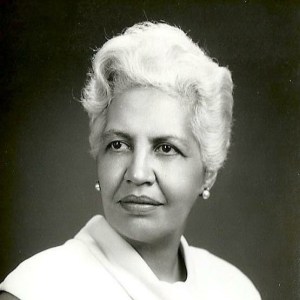
My grandmother was a beautiful woman of color, she did not feel a need to talk much, she was at peace with herself and silently expected the same from others. I can remember that she liked to live comfortably, that she was always learning new things and that she was unapologetically black. She would do whatever she could to help you, no matter who you were, thereby announcing to the world that it would NOT be her color but her compassion that would define her.

She kept a world map on her wall marked with all the places she had visited in her lifetime. There were push pins scattered across the islands in the middle of the oceans and on the mainlands of the continents. It was as though someone had blindly thrown a fist full of the pins at the map not caring where they pierced the cork-board holding it up, leaving one to try to decipher a non existing pattern of the brightly colored plastic dots. It hung as a banner of how she lived on this earth, borders were man made lines that would not limit her. My grandmother’s influence was my medicine, alleviating me of the pains created by a system that confines the soul, breaking us down to the most basic definition of ourselves. She would be the inspiration I’d draw from the moment we moved and the instant I picked up a pen in attempt to write my own narrative, void of any definable boundaries or predictable patterns.

Africa quickly teaches you that it has no intention of conforming to you, that you must conform to it. It has never been a place where the narrative of the foreigner blends neatly into the backdrop. It is a place where new comers who think that the world should conspire to accommodate them are met by a spirit residing the land. A spirit that is unimpressed by humanity, having birthed nations that predate western institutional thought, a spirit that invalidates the degrees of those who think they are defined by them. A place that would demand that I reexamine what it meant to live here, what it means to be human.

0567CC28-A9C5-4FCA-9F50-A994AA82C405

The moment that would change me forever came when I expected it least. We had purchased a Peugeot 405, a car not built for sub Saharan Africa, a colonial relic left behind as a symbol of French influence. I was riding with my wife and 3 children, the youngest having been born since we arrived in Senegal. Edou innocently turned to me to ask how I felt being the only white person in our family? Wait! What!? Who? What in the world….? For him, having been born here, black was black, the idea of me being a man of color was ridiculous. We were in a land where the president is black, the government officials are black, lawyers, doctors, policemen, and military personal are all black Africans. How could he possibly see me as anything close to black surrounded by so many hues of brown? I gripped the steering wheel, pulled over, turned around to face this 4 year old who dare call his great grandmother’s youngest grandson white. I looked at his brother and sister sitting silently with their faces turned to hide their expressions. I glanced at my wife, looking sheepish, as if a 15 year joke that she had been waiting to hear had finally been told. I looked back at Edou, nothing but pure innocence in his eyes, sincerely concerned for his father and my feelings as a “white man”. Despite trying to put on my best angry father face to educate my youngest son and the overly amused members of my family of my true identity, of how I was a man of color, I could do nothing but laugh louder than I had in a very long time…..

This was not how this was supposed to end! I did not come all the way to Africa in search of my destiny only to be called a white man by my own son. How could this be? That’s when I understood the true lesson this continent had taught me. Only after living outside of the U.S. for some years could I see my hand in front of my face, how racism traumatizes the human psyche, regardless of the color of your skin. Living in a black country had set me free, not from a slave hold but from the prison of myself, built into my mind as an American. Africa took me in and pushed me to rethink who I was, to release years of anxiety and inspire me to write my own story.

To my dear grandmother Lenora Young. May you rest in peace but may your legacy live on, We miss you….

Volume 3 – Changing the World, Saving Myself: A Tribute to El Hadj Malik Shabaz

If you had told me 20 years ago that one day I would convert to Islam I would have responded with a detailed lecture on religion and how it has been used to manipulate the innocent, denying them what they are entitled to as children of an undefinable being. Not having been raised religious, if I submitted to anything, it would be an act of liberation, setting me free from the chaos of this world, caught between the beauty of creation and men claiming that scripture grants them the authority to paraphrase divine truth to serve their personal interests. Living in the midst of such manipulation I concluded that peace would only be found the moment my soul separates from my physical body, releasing my spirit to fly beyond the stars, far from the burden of earthly ignorance. When I arrived at this otherworldly place I would declare my religion, until the day of my assumed assent I would protect myself from those who dare imply they possessed a heavenly mandate, preferring to trust my inner reflections, concluding that my heart was more reliable than testifying before self-declared men of God.

After graduating from college I would designate myself as a solider in the fight against inequality. My first mission would be as a social worker in Prince Georges County Maryland where armed with my best intentions and a list of names and addresses, I would drive into neighborhoods late into the evenings to deliver state sanctioned services. In an aging Mercedes Benz handed down to me from my father, a car that was once used to carry me to play in an area soccer league, I would arrive at the homes of those I was supposed to help save. Far removed from freshly lined grass fields and goal posts woven with white nylon nets, the diesel engine revved like a tracker trailer to expose me, after years of providing me with a privileged childhood, its roar proclaimed an inherent contradiction with my perceived mission. How could someone who attended a private prep school and a well respected state university, driving an inherited Mercedes, know anything about how to guide folks out social and economic stratification? How could I expect to reverse centuries of social injustice by doing 10 home visits a day equipped only with a good heart and a list of names attached to a clipboard….

My determination and compassion were complicit in sabotaging my mission to save America from itself, no matter how hard I attempted to make a difference, what I witnessed brought me to my knees. The truth I sought would be found in pleading to understand the predicament of those I was expected to help. The irony was that they would end up saving me, bringing me closer to understanding the miracle found in putting your interests aside and seeking mercy for all humanity…

I will never forget the things I experienced during my home visits, houses that looked so peaceful from the outside but when you walked inside another story unfolded. In the living spaces you notice the obvious, decorative objects strategically placed in attempts to hide the evidence of pain, glass framed family photos shielding the sight of stained couches and walls, odors so stale you’d be left speechless, knowing that for them, it had become normal, their sense of smell accepting their fate. I was a naive witness to a brutal but yet quiet war being waged in which the casualties survive, becoming silent victims, ashamed of their condition. It is the greatest lie ever told in the land of the free, that people make a conscious decision to live in poverty, that their lack is their fault, that they must remain prisoners to the consequences of their misfortune regardless of their desires for something different. I saw how families turned to religion as a way to ease their suffering, to feel some semblance of hope, finding refuge in the promise of a savior, having to accept as I had, that peace may only come the day we would be granted permission to fly free from this world to declare our religion.

Once again, I was forced to evolve, step back and look at the picture before me, one overexposed by the narrative of a nation that was laced with contradictions. I realized that the things we want to change most about the world are often things we must first change in ourselves, that the plight we seek to change might be the same plight that exists in our own hearts, if we change what’s in our hearts we just might change the world…

Dedicated to El Hadj Malick Shabaz – A man who walked his path regardless of where it took him, who fought to carry the light of truth and who didn’t fear if it meant facing the consequences of shinning that light on himself…..

Volume 4 – Seeking My Religion, Finding Love….

I converted to Islam in 2001, the summer before the Trade Center was attacked and exactly 1 year after moving to New York with my family. We had moved from Virginia, where I had spent the majority of my life, so that Karima could give birth to our second child in the city where she grew up. Having been raised between Harlem and Senegal she never really felt at peace living below the Mason Dixon line. Karima comes from a long line of African women, inheriting a spirit that does not easily fit into notions of race in America, women who communicate volumes by saying nothing at all, women who make only occasional eye contact with those they meet, hesitant to trust anything too far removed of what they know. Women who whisper thoughts coded in 3rd world languages, their accents act as their defense, protecting them from inevitable encounters with 1st world callousness. Women who proudly stare into the face of bigotry, unafraid to speak truth in their native tongues for they measure their value by their connection to tradition, not by how well they speak colonial languages.

To be forced to absorb the notion that everything about them is contrary to the norm, that they are the antithesis of feminine beauty is a crime against humanity. It is a crime in which we are all complicit, giving our consent by allowing beauty to be defined in tones of beige, forcing us to concede to blatant attempts to filter beautiful shades of brown in a frantic effort erase traces of blackness. We remain silent as connections to a continent get hastily removed from our consciousness, devaluing women who for centuries have shouldered the burden of white exclusivity while being told that their uniqueness is a spectacle, worthy of contempt and marvel, undeserving of respect.

Karima learned at an early age about the reality of being both African and American. I immediately noticed her gift for alchemy, for her ability to transform negative sentiment into something precious, how she navigated her worlds with a grace that would teach me what it means to love. It would be love that would serve as my guide, awakening my spirit to its inheritance, fulfilling the of promises of those who had come before me. It would be an African woman who would walk into my life and inspire me to evolve, she would be the answer to prayers that I didn’t even know I had made, she would pry open my heart to create space for the essence a religion to be poured in.

Before accepting any religious doctrine I had to hold service and assemble as a congregation of one at the alter of inner honesty. It would be here, in conversations with my heart that I would learn that each seeker’s path is unique, that the search for truth is personal and requires an intimacy that respectfully expects discretion. Our discovered sacred truths are not meant to be worn on our sleeves as badges of honor for to carelessly advertise our devotion is to empty all sincerity from the cup of our declared beliefs, thereby leaving our reflections to ring with arrogance and judgment. Respect for humanity grants us all the right to walk our path on which we learn from listening not from telling, a path on which we benefit from prayers for peace, not from mandating our interpretations of right and wrong onto those we claim to love. It would be in my inner sanctuary that I would receive the confirmation that this beautiful brown skinned woman would become my wife, that this sun kissed, dimple cheeked angel had come to me with a message from above, her presence would be a confirmation of God’s grace, of Allah’s (SWT) intention to bless me.

We would arrive in New York City to start a new stage of our life, not long after, I would take Shahada (declare Islam as my religion). I would learn so much surrounded by the richness of the city. Living among different people and cultures, I would conclude that the moment I say I’m Muslim with the smallest grain of false pride, with the slightest sentiment that could be perceived as an attempt to elevate my position above another, is the moment that I am no longer Muslim, trading away my religion, exchanging it for my ego’s desire to declare righteousness. The city would show me how easily we divide, how we can be so close but distance ourselves while claiming to live by similar lessons, lessons taught by our greatest teachers, who explained the hidden messages of our universe through scripture, messengers who came to reform religion when humanity had lost its way.

Standing at one of the highest points of Manhattan I would watch as the buildings fell, destruction fading into cloudless skies, concrete, iron, and ash dissolving to a grayish blue, ominously signaling that the innocent had been stolen from those who loved them. It was a declaration of war, an irrational battle against the instincts of love that make us human. The sacred words of my new found religion would be interpreted as a banner of terror but I knew this act was not about religion, it was about men who had been led astray, strangers to compassion, foreigners to their own hearts. Men who presumingly never experienced true intimacy, who knew not what it means to concede to the power of creation, who were likely unable to recognize the beauty of the women who birthed them, the women who lived among them or the women who might have been their advocates in the search for the divine truth they claimed to represent. Men coming from a land where repression is mistaken for righteousness, making the grave error that chauvinism is justified by religious law, that violence is an appropriate language in which to praise God.

I would become an immigrant on that day, an immigrant seeking asylum in Africa, a self declared refugee of a war against the unknown. Years later it seems the war rages on with retaliatory battles underway that employ similar tactics, attacking the innocent and terrorizing the “accused”, justifying irrational behavior resulting from perceived fears, fears of difference, of knowledge, of a woman’s greatness….. The tragedy that occurred that day appears to have turned many into exactly who “the enemy” perceives us to be, ideologues who promote intolerance, who rationalize racism and threaten the world with acts of violence. Sadly, religion is again being used as a banner, waved in support of misguided men who assume it is irreprehensible to have a blatant disregard for life, attempting to plunge the planet into despair for their own profit.

May we all see clearly the injustices before us, the injustices we knowingly and unknowingly profit from, past and present, and that we resist, for the injustices we ignore today, will be the injustices that will one day be our children’s to bear.

To those who know and respect love, to those who know that battles are won and lost, that compassion guides and love conquers, to those who know that the essence of the word lives within our hearts and that the final word is not ours to speak…. to those who know that prayer works and who continue to fight in their own ways, who know that there is nothing new under the sun and that brighter days will come, as promised…..

May we never stop loving….

Dedicated to the women of the world and to Africa, to four generations of Black Muslim Women from Senegal – Soukna Diallo, Marieanne Cisse, Soukeyna Boye and Karima Grant. Thank you for never compromising any piece of who you are, your spirits have guided me to happiness and I am eternally grateful.

Karima – your love is a gift, a blessing from God, my religious devotion and success is measured by my respect for you, I pray that I never take you for granted……

Volume 5 – The Truth Africa Tells

This slideshow requires JavaScript.

I had lied to myself for years, convinced that if I moved here my transition would be seamless, that assimilation would be easy. The lack of critical dialogue about Africa in the “modern world” allows Africa’s story to be carelessly told through images laced with bias. Shirtless malnourished children with outstretched hands, warlords sitting in jungles recruiting kids to kill, and the belief that the most deadly diseases of the world originated from an African primate contribute to a stunting of our collective consciousness, retarding our ability to hold meaningful discord about our common history. I heard this flawed story for years and refused to accept it but to simply deny what I knew Africa wasn’t, didn’t mean that I had any idea what Africa was…..

Africa changed me. Not in the way I assumed it would, not in a romantic way, for Africa scoffs at the idealistic visions of foreigners who come to live out their unwritten stories. If you come to Africa with dreams of reclaiming your past, to star in a personalized remake of a slave narrative that ends with iron chains being cast into the sea, if you come to spread the gospel, to claim to be an evangelist while ignoring the role of race politics in religion, if you come assuming to know what the “less fortunate” need, to save brown and black people from themselves, or if you come to dig into the sand to claim artifacts that prove your scholarly assertions, Africa will quietly mock you, it will unforgivingly turn your story into a cliche, leaving you to question all you thought you knew about the characters of your contrived fiction.

Africa mocks the western narrative for Africa mocks time, mocks how time is measured, minutes and hours lose their respect when centuries of injustice go uncounted, days are greeted with passivity when lifetimes of achievement are treated as insignificant. Seconds don’t represent the passing of minutes, they count the incessant steps of privileged feet pressing their soles into land they claim as a moral playground, hoping to wipe their conscience clean of the privileges their passports grant them. One day Africa will stop mocking time, stop mocking humanity for living a lie….

I didn’t know what to expect when I first stepped off the plane, there was a moisture in the air that mixed with the oder of something burning. I would learn that the smell was from outdated Diesel engines, taxis and buses carrying people in reconstructed metal carriages blowing pollution into sun lite skies, and like a second rate magician performing his final trick, illusions of modernization vanish in the clouds of grey smoke, the smell of exhaust suffocating a nation trying to break free from the grip of post colonial monetary manipulation. It would be the burnt air of Dakar that would offer me my first lesson in understanding the continent and the truth its story tells…..

The second lesson was waiting for me inside the terminal. It was just before sunrise and as I approached the security checkpoint an immigration officer slowly stood from his chair. He was wearing flip flops with government issue pants rolled up just above his ankles, a sign that he had performed his ablutions for the morning prayer. But his demeanor was not of someone interested in a higher power, his morning duties outweighing his intentions to declare God’s greatness. He begrudgingly made his way towards the booth to process my arrival. I greeted him with the one French word I knew, “bonjour”, he glanced at me unimpressed, sighed and proceeded to clean his teeth with some sort of twig. He slowly removed the stick from his mouth, blew small wooden slivers from his lips to the floor and returned my greeting with an inaudible mumble. He asked me questions that I couldn’t understand and with each shrug of my shoulders he would ask again in a louder tone, as if gradually increasing the volume of his voice would somehow improve my level of French. Frustrated, he finally conceded to my ignorance, shooing me on my way, relieving him from the burden of my presence and liberating him to seek his sanity in a string of prayer beads.

Here was a man that spent his days watching foreigners eagerly maneuver their way into his country, many unable to speak even one of the multiple languages he knew. He surely realized that there was nothing that separated him from each new arrival, nothing except his nationality and the hand life had dealt him. Whereas the people he was forced to greet everyday were considered tourist in his country, he would be labeled an immigrant should he ever attempt to travel to the very places they had come from, his world made smaller by the legacy of colonialism and the economic interests of the “developed” world. He would have to learn to swallow this bitter irony while continuing to process each new visitor, delaying him from practicing his faith and praying for the patience to be able stamp the passport of the next overly assuming foreigner.

With my American self centeredness I had brushed aside the officer’s discontent and retrieved my luggage to begin my life in his country, oblivious to what had just taken place. This man had signaled the beginning of the end of my own contrived narrative, the continent quietly mocking me, unbeknownst to me the truth its story tells was only beginning to be revealed…..

To all the people of Senegal, you’ve taught me more than I could have ever imagined, the US raised me, but you have formed me, I am forever grateful …